
AI in Content Writing: How to Use It Effectively Without Losing Creativity

Introduction
The rise of artificial intelligence has transformed almost every industry, and content marketing is no exception. Today, businesses, bloggers, marketers, and freelancers are using AI in Content Writing to research topics, generate ideas, optimize content for search engines, and improve productivity. While AI has made writing faster, many people still struggle to use it effectively. Some rely on AI too much, resulting in generic articles, while others avoid it completely because they fear losing creativity.
The truth lies somewhere in the middle. AI in Content Writing should not replace human writers, it should enhance their capabilities. When used correctly, AI can reduce repetitive work, speed up research, improve SEO, and help writers focus on what truly matters: creating valuable and engaging content for readers.
This guide explains how to use AI wisely, where it adds value, where human expertise is still essential, and the best practices for creating content that ranks well on search engines while connecting with your audience.
What Is AI in Content Writing?

AI in Content Writing refers to the use of artificial intelligence to assist writers throughout the content creation process. AI tools analyze large amounts of information and use natural language processing to generate text, suggest ideas, improve grammar, and optimize content.
Modern AI writing tools have become much more advanced than simple grammar checkers. They can help create outlines, summarize information, suggest titles, rewrite paragraphs, and even recommend keywords for SEO.
However, AI doesn’t truly understand emotions, personal experiences, or your brand voice. It predicts words based on patterns rather than real-world understanding. That’s why successful businesses use AI in Content Writing as an assistant rather than a replacement for human creativity.
Whether you’re writing blogs, landing pages, product descriptions, or email campaigns, AI in Content Writing works best when combined with human editing and strategic thinking.
Benefits of AI Writing Tools

One of the biggest reasons businesses are adopting AI writing tools is the significant improvement in productivity. Writers no longer need to spend hours staring at a blank screen or manually researching every topic from scratch.
Instead, AI writing tools can help with:
- Brainstorming blog ideas
- Creating content outlines
- Improving grammar and readability
- Suggesting SEO-friendly headings
- Generating multiple title options
- Simplifying complex information
- Repurposing existing content
Using AI in Content Writing allows marketing teams to publish content faster while maintaining consistency. This is especially useful for agencies managing multiple clients or businesses publishing blogs regularly.
Although AI saves time, writers should always review the output for accuracy, tone, and originality before publishing.
Why AI Content Creation Still Needs Human Creativity
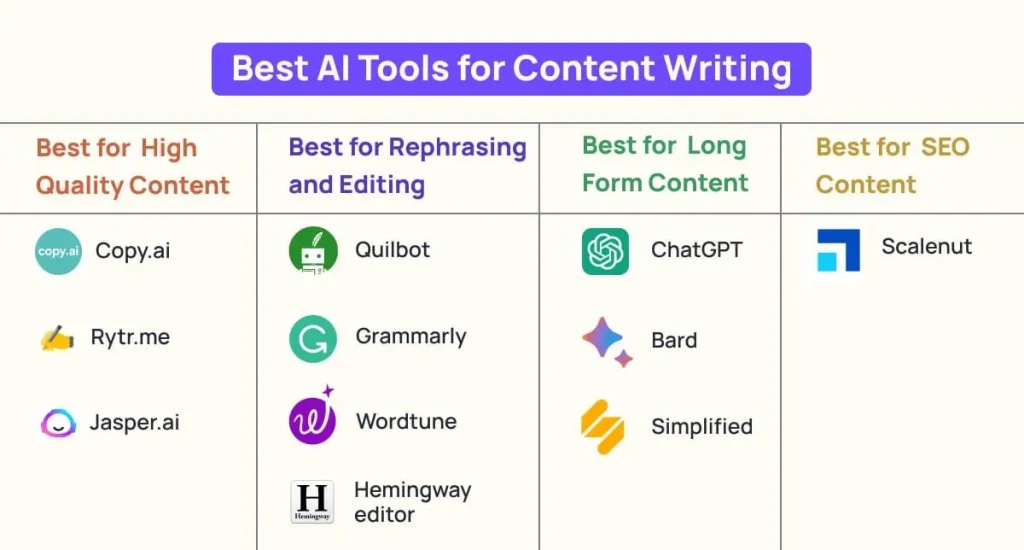
Many people believe AI content creation means pressing a button and publishing whatever AI generates. Unfortunately, this often results in generic articles that provide little value.
Successful AI content creation begins with understanding your audience. AI can generate information, but only humans understand customer pain points, brand personality, storytelling, and emotional appeal.
For example, if you’re writing about digital marketing services, AI can explain SEO concepts. However, only an experienced marketer can include real client examples, practical tips, and industry insights that make the article trustworthy.
The best approach is to use AI in Content Writing for research and drafting while relying on human expertise for editing, examples, and personalization.
How to Use Content Writing with AI Without Sounding Robotic
Many writers worry that content writing with AI produces repetitive and unnatural articles. This usually happens because users copy AI-generated text without reviewing it.
To improve content writing with AI, follow these simple practices:
- Add real-life examples.
- Include your own opinions and experiences.
- Rewrite repetitive sentences.
- Use conversational language.
- Break long paragraphs into smaller sections.
- Verify statistics and facts.
- Add practical tips readers can immediately apply.
When done correctly, content writing with AI becomes faster while still maintaining authenticity and readability.
Instead of replacing your writing process, AI should simply make it more efficient.
AI for SEO Content: More Than Just Keywords

Creating content that ranks requires more than inserting keywords. AI for SEO content helps writers understand search intent, organize headings, and improve readability.
When using AI for SEO content, focus on:
- Matching user intent
- Answering common questions
- Improving content structure
- Finding keyword opportunities
- Creating engaging meta descriptions
Common Mistakes People Make While Using AI in Content Writing
Although AI in Content Writing offers many advantages, several mistakes reduce its effectiveness.
Some common errors include:
- Publishing AI-generated content without editing.
- Ignoring fact-checking.
- Overusing keywords.
- Creating repetitive paragraphs.
- Writing without understanding search intent.
- Forgetting the brand’s tone of voice.
- Relying entirely on AI for creativity.
Humanize AI Content Before Publishing
One of the biggest challenges with AI-generated articles is that they can sound generic or repetitive. That’s why it’s essential to humanize AI content before publishing it.
To humanize AI content, read the article as if you were the target audience. Replace robotic phrases with conversational language, add examples from your own experience, and include practical tips that AI may have missed.
For example, instead of writing:
“Businesses should improve customer engagement through valuable content.”
You can write:
“Think about the last blog that made you bookmark a website or share it with a colleague. It probably solved a real problem or taught you something useful. That’s the kind of value your content should provide.”
This simple change makes your content more relatable and engaging.
Another effective way to humanize AI content is by adding industry-specific insights, client stories, or case studies. These elements build trust and show readers that the content is backed by real expertise rather than just AI-generated information.
AI Content Optimization: Make Every Article Perform Better

Writing good content is only half the job. The other half is ensuring people can find it online. This is where AI content optimization becomes valuable.
Modern AI tools can help identify missing keywords, improve readability, suggest internal links, and organize content in a way that’s easier for both readers and search engines to understand.
However, AI content optimization should always support your SEO strategy—not replace it. Search engines prioritize helpful, original, and trustworthy content over perfectly optimized text.
When optimizing your content, focus on:
- Writing clear and descriptive headings.
- Using relevant keywords naturally.
- Including FAQs to answer user questions.
- Adding internal and external links where appropriate.
- Improving readability with short paragraphs and bullet points.
- Optimizing images with descriptive alt text.
- Writing compelling meta titles and descriptions.
Effective AI content optimization improves your chances of ranking while also creating a better experience for your audience.
How an AI Writing Assistant Improves Productivity
An AI writing assistant is like having a digital collaborator that helps with repetitive tasks while allowing you to focus on creativity and strategy.
A good AI writing assistant can help you:
- Generate topic ideas.
- Create article outlines.
- Rewrite difficult paragraphs.
- Improve grammar and readability.
- Suggest SEO improvements.
- Repurpose blogs into social media posts.
- Create email newsletters from existing content.
For content marketers and agencies, using an AI writing assistant can significantly reduce production time without sacrificing quality.
Remember, AI should handle repetitive work while humans provide expertise, originality, and emotional connection.
Best Practices for Using AI in Content Writing
If you want to get the best results from AI in Content Writing, follow these proven practices:
1. Start With Your Own Research
AI works best when you already understand the topic. Gather information from trusted sources before asking AI to generate content.
2. Give Detailed Prompts
Instead of asking AI to “write a blog,” provide clear instructions about the audience, tone, word count, keywords, and objective.
3. Edit Every Draft
Never publish AI-generated content without reviewing it. Check for accuracy, readability, grammar, and brand consistency.
4. Add Personal Insights
Your experiences, examples, and opinions make the content unique and trustworthy.
5. Focus on Search Intent
Don’t just target keywords. Understand what readers are looking for and ensure your content answers their questions.
6. Keep Learning
AI technology evolves rapidly. Stay updated with new features, SEO best practices, and content marketing trends to maximize its potential.
The Future of AI in Content Writing
As AI becomes more advanced, it will continue to assist with research, content planning, personalization, multilingual content, and predictive SEO analysis. However, creativity, storytelling, emotional intelligence, and strategic thinking will remain uniquely human strengths.
Businesses that combine AI efficiency with human expertise will produce content that not only ranks well but also builds trust and drives meaningful engagement.
Instead of fearing AI, writers should learn how to use it responsibly. Those who embrace AI as a collaborative tool will be better prepared for the future of digital marketing.
Conclusion
Using AI in Content Writing wisely can help you save time, improve productivity, and optimize your content for search engines. However, AI should never replace critical thinking, creativity, or your unique perspective.
The most successful content creators use AI to support their workflow while relying on human expertise to produce content that informs, inspires, and connects with readers.
Frequently Asked Questions
1. What is AI in content writing?
AI in content writing refers to using artificial intelligence to assist with tasks like brainstorming ideas, writing drafts, improving grammar, and optimizing content for SEO.
2. Can AI completely replace content writers?
No. AI can speed up content creation, but human creativity, expertise, storytelling, and strategic thinking are still essential for producing high-quality content.
3. Is AI-generated content good for SEO?
Yes, if it is edited, fact-checked, optimized for search intent, and provides genuine value to readers.
4. Which AI writing tools are the most popular?
Popular options include ChatGPT, Claude, Jasper, Copy.ai, Gemini, and Writesonic.
5. How can I make AI-generated content sound more human?
Add personal experiences, rewrite repetitive sentences, include examples, and use a conversational tone.
6. Does Google penalize AI-written content?
Google does not penalize content simply because AI was used. It rewards content that is helpful, original, accurate, and written for users.
7. Should beginners use AI for content writing?
Yes. AI can help beginners overcome writer’s block, organize ideas, and improve writing skills when used as a learning tool.
8. What is the biggest mistake people make while using AI?
The biggest mistake is copying AI-generated content without editing, fact-checking, or adding unique insights.